Strengthening Access to Justice in Saskatchewan: Bringing Legal Education and Navigation Closer to Community
-
by
TAYFFI Media
By Temi Oyedeji
Strengthening Access to Justice in Saskatchewan: Bringing Legal Education and Navigation Closer to Community
“Statistics Canada data highlight the disproportionate representation of Black people in Canada’s criminal justice system. Between 2016/2017 and 2022/2023, Black people accounted for 6.2% of accused persons in adult criminal court cases, despite representing 3.7% of Canada’s adult population.” — Anthony Olusola, Executive Director, TAYFFI
For many people, navigating Canada’s justice system can begin with uncertainty. What are my rights? Where can I find reliable legal information? What happens if I am arrested or required to appear in court? And who can help me understand what comes next?
These questions can become even more difficult when language, cultural differences, unfamiliar legal processes or limited access to trusted information create additional barriers.
Through its Black Legal Clinic and Justice Navigation Program, Truly Alive Youth and Family Foundation Inc. (TAYFFI) is working to help bridge these gaps by bringing culturally responsive legal education, practical navigation support and connections to appropriate services closer to the communities that need them.
TAYFFI is a Saskatchewan-based organization that works with individuals, youth and families through programs designed to strengthen inclusion, participation, skills, well-being and access to community supports. Its Justice Navigation Program forms part of this broader commitment, helping community members better understand and navigate justice-related systems.
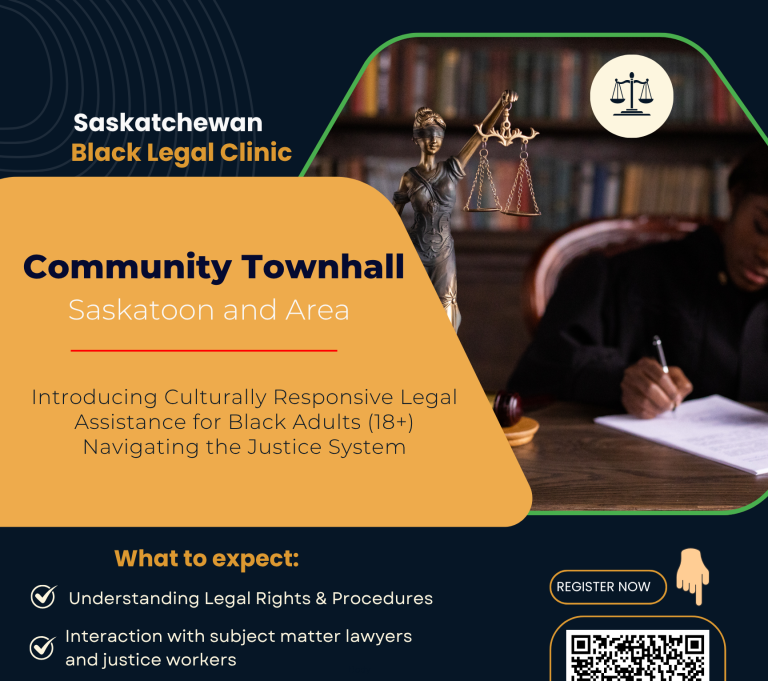
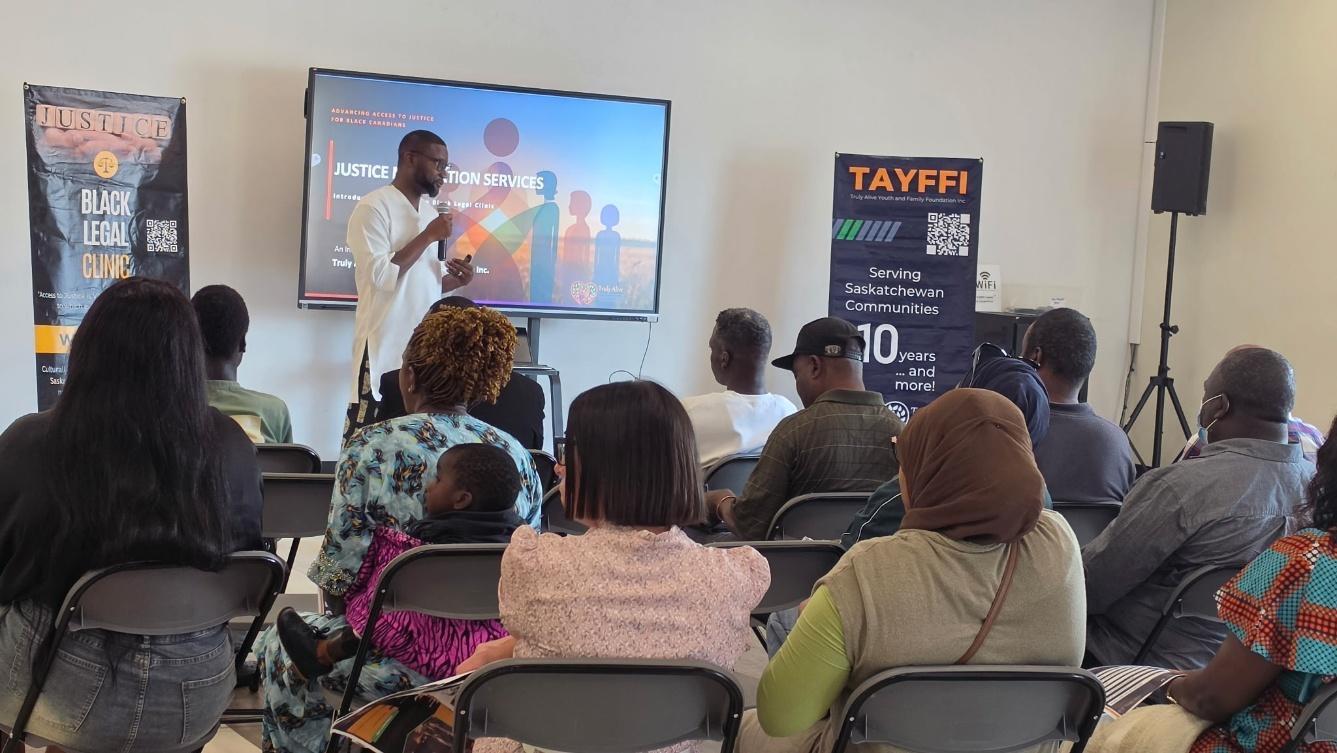
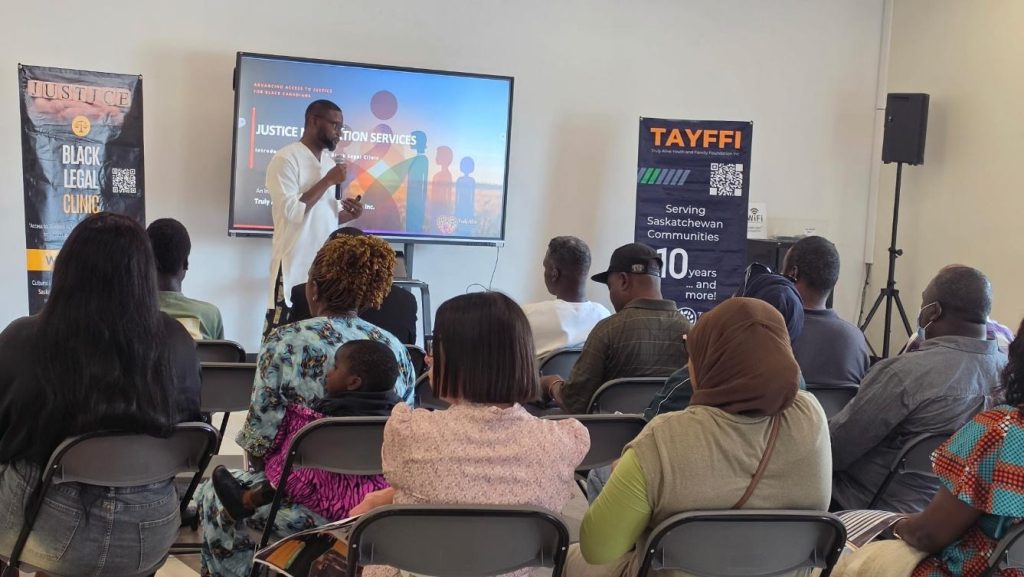
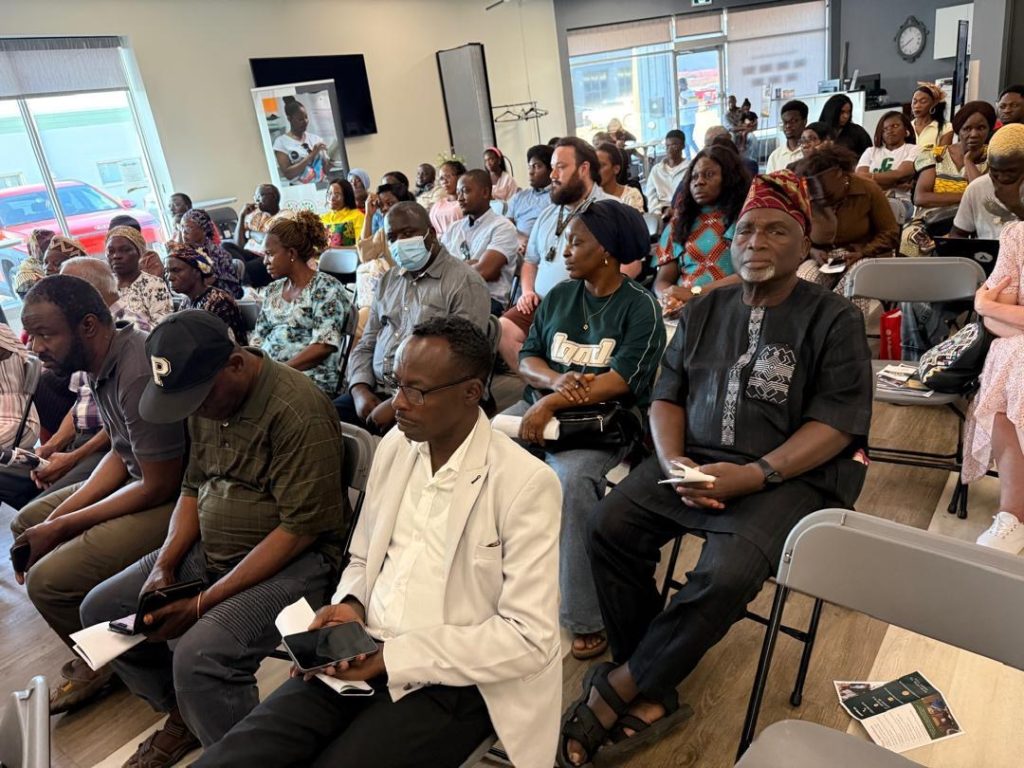
On July 31, 2026, TAYFFI brought community members, families, service providers, legal professionals and partners together at the Women’s Business Hub for the Black Legal Clinic Community Town Hall. Attended by over 100 people, the session created a community-based space for practical conversations about legal rights, access to justice and everyday legal issues affecting community members.
In his opening remarks, TAYFFI Executive Director Anthony Olusola highlighted the broader context in which the Black Legal Clinic and Justice Navigation Program operate. Citing Statistics Canada data, he noted that Black people are overrepresented in Canada’s criminal justice system. Federal data cited during his presentation showed that Black accused persons represented 6.2 per cent of adult criminal court cases between 2016/2017 and 2022/2023, compared with 3.7 per cent of Canada’s adult population. The numbers provide important context, but the consequences of navigating an unfamiliar justice system are experienced at an individual and family level.
To illustrate this, the Director presented a hypothetical case involving a refugee who had recently arrived in Saskatchewan and was facing a serious criminal charge while also experiencing language, literacy and cultural barriers. The scenario demonstrated how understanding court processes, accessing interpretation, communicating with legal counsel and helping family members understand what is happening can all become critical parts of effective justice navigation.
For TAYFFI, this is where culturally responsive navigation can help bridge the gap between having legal rights in principle and being able to understand and exercise those rights in practice. Through the Justice Navigation Program, TAYFFI provides supports that include legal information and navigation, interpretation and cultural brokerage, referrals, workshops, limited legal representation, estate planning, family-law assistance and reintegration support. Access to justice begins before a courtroom. It begins with understandable information, trusted support and knowing where to turn for help.
Bringing Legal Education into the Community
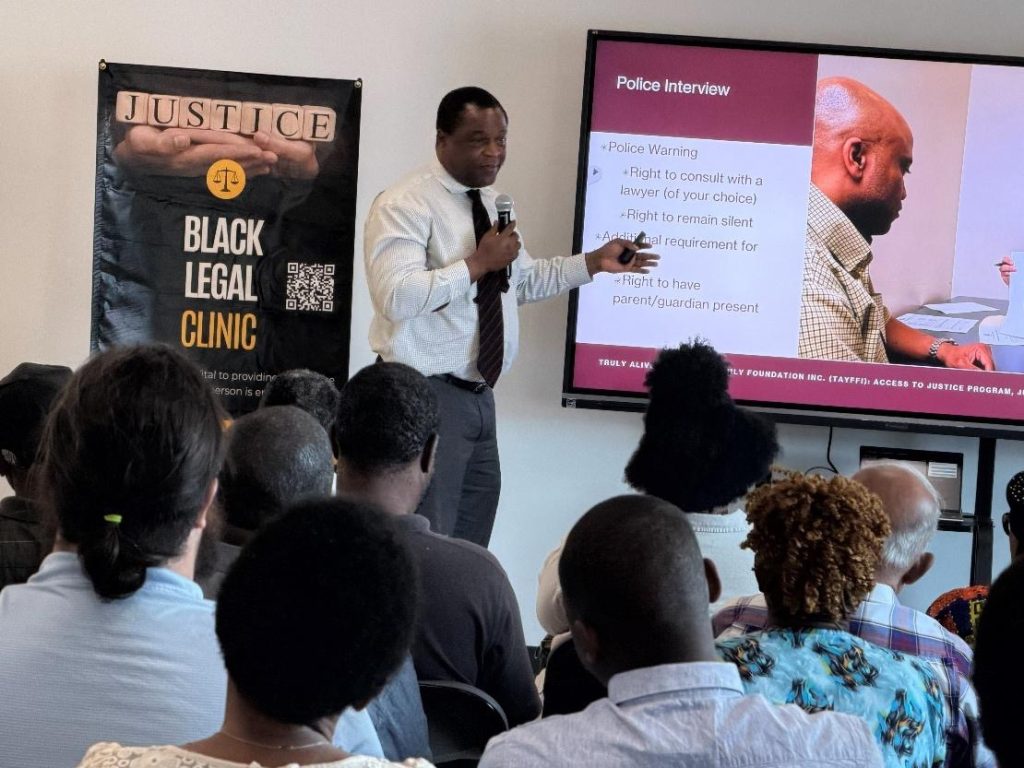
The main objective of the Community Town Hall was to make legal information accessible in a setting where participants could learn, ask questions and engage directly with legal professionals. Barrister and Solicitor Benjamin Omoruyi, Principal Lawyer at Omoben Law, led participants through a practical discussion of legal rights and key stages of the Canadian justice process. Beginning with a straightforward question, “what actually happens when someone is arrested?” Omoruyi explained what individuals should understand before, during and following an arrest.
Participants learned about the right to be informed of the reason for an arrest, the right to speak with a lawyer and the right to remain silent. The discussion also introduced key concepts and processes including bail, disclosure, peace bonds, Legal Aid and self-representation.
“If you are arrested by police, in Canada, you have the right to be informed promptly of the reason for your arrest. Knowing your rights is essential to protecting them,” Omoruyi told participants.
Throughout the presentation, speakers shared practical legal solutions to build legal literacy and assist community members recognize their rights, identify appropriate supports and make better-informed decisions when interacting with the justice system in Canada.
The Town Hall also created an opportunity for participants to raise questions about the legal issues they encounter in everyday life. Questions and discussions covered landlord and tenant disputes, security deposits, traffic matters, interactions with police, Legal Aid, disclosure and navigating court processes.These conversations reinforced an important lesson: access to justice is not only about legal representation once someone reaches court. It is also about whether people can find accurate information, understand the options available to them and identify trusted sources of assistance early enough to make informed decisions.
For TAYFFI, listening is an important part of service delivery. Community engagement helps the organization understand emerging needs and strengthen the relevance of its education, referrals and navigation supports. Legal education is one part of TAYFFI’s broader approach to improving access to justice. Through the Justice Navigation Program, individuals can also receive assistance identifying appropriate services, understanding available options and navigating justice-related systems.
During the Town Hall, a participant who had previously received support from TAYFFI’s Justice Navigation team reflected on the importance of receiving consistent, culturally responsive support while incarcerated and the dignity that came from knowing that people outside the institution had not forgotten them.
Through the Community Town Hall, participants learnt that access to justice extends beyond what happens inside a courtroom. Knowing one’s rights, understanding legal processes, having access to reliable information and being able to identify trusted support when it is needed is critical.