Culturally Responsive Prevention and Intervention on Gender-based and Intimate Partner Violence among Saskatchewan Black Communities.
-
by
TAYFFI Media
A Roundtable Discussion on Culturally Responsive Interventions and Prevention of Gender-Based and Intimate Partner Violence in Saskatchewan Black Communities
Gender-Based Violence (GBV) and Intimate Partner Violence (IPV) remain significant yet often under-discussed issues within Black communities in Saskatchewan. Many Black individuals affected by GBV or IPV choose not to speak out due to fear of being misunderstood, cultural stigma, and systemic barriers that prevent access to holistic and culturally safe support services.
While provincial data on the prevalence of GBV/IPV within Saskatchewan’s Black communities is limited, national statistics reveal that Black women experience higher rates of gender-based and intimate partner violence compared to other visible minority groups. The absence of localized data not only obscures the true scope of the issue but also hinders the development of targeted and effective solutions.
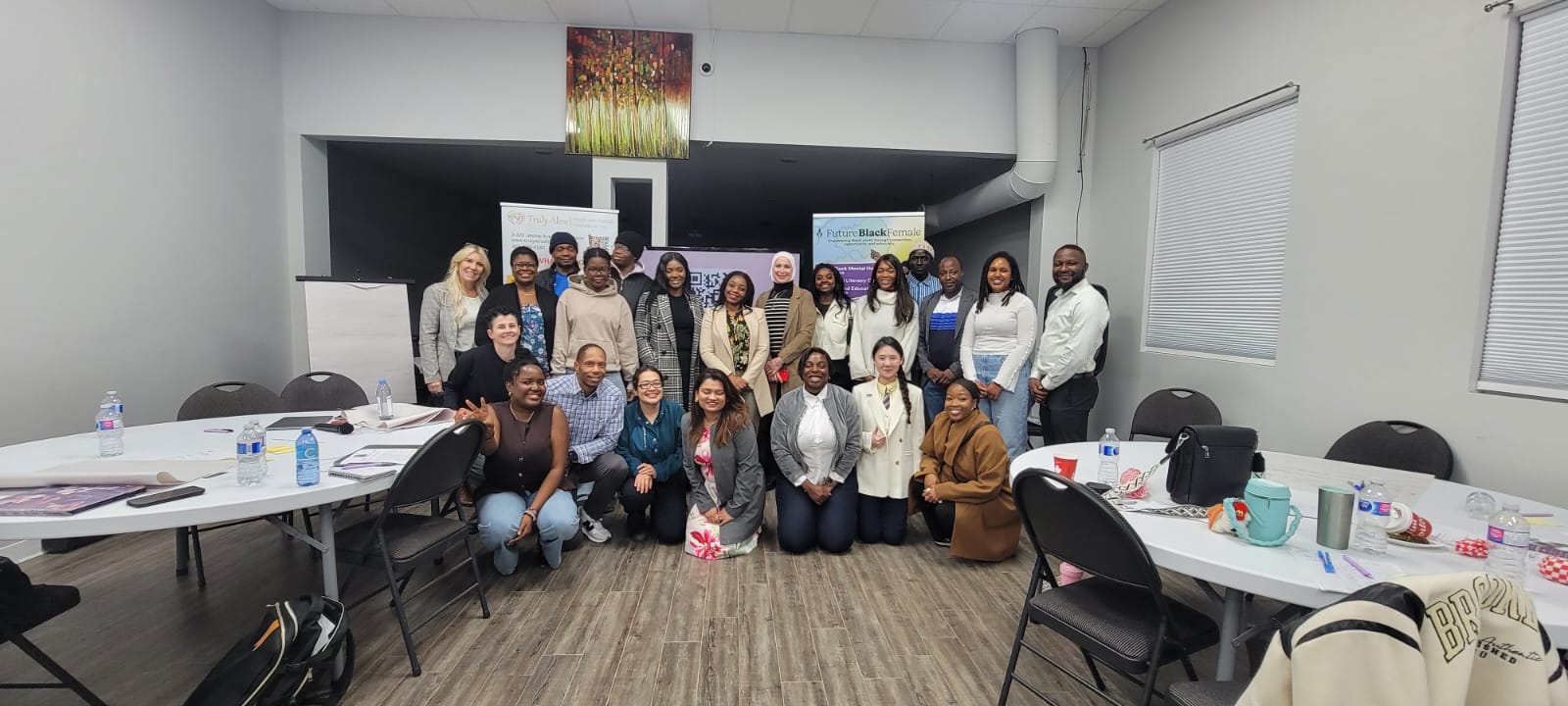
On October 23rd, Truly Alive Youth and Family Foundation Inc. (TAYFFI), in collaboration with Future Black Female—a feminist-informed non-profit organization supporting Black women and youth in Ontario—organized and hosted a roundtable discussion and training on culturally responsive interventions to GBV/IPV for organizations serving Black communities across Saskatchewan.
The roundtable explored the historical roots and trauma of gender-based violence, as well as the social constructs within Black communities that influence perceptions and responses to violence. Participants examined how systemic structures in Canada often fail to adequately meet the needs of Black survivors and discussed ways to foster inclusive, community-based solutions.
Common themes that emerged from the discussion included the fear of consequences, lack of safe spaces, community pressure to protect perpetrators, and the normalization of violence—all contributing factors to the ongoing silence surrounding GBV/IPV in Black communities.
This important dialogue marks a step toward building culturally relevant interventions and empowering community organizations to respond more effectively to gender-based and intimate partner violence through a lens of cultural understanding, empathy, and justice.